Mortgage Refinance Rates India 2026: Compare Top Banks & Save on EMIs

Mortgage refinance rates are the interest rates lenders charge to replace an existing home loan with a new one. As of March 2026, the average 30-year…

Share

Mortgage refinance rates are the interest rates lenders charge to replace an existing home loan with a new one. As of March 2026, the average 30-year fixed refinance rate in India stood at 6.60%, according to Zillow data. This process allows borrowers to secure more favorable terms, potentially lowering monthly EMIs and saving significantly over the loan’s tenure.

Parameter Details
Definition of Mortgage Refinance Rates The interest rate charged by a lender on the total amount an individual borrows to replace an existing home loan with a new one, typically to secure more favorable terms.
Primary Goal of Refinancing To secure a more favorable interest rate, potentially lower monthly EMIs, and save a significant amount over the loan term.
Factors Influencing Refinance Rates Credit score, loan amount, loan tenure, employment type (salaried or self-employed), income stability, lender’s internal risk assessment, market conditions, and RBI’s repo rate.
Average 30-Year Fixed Refi Rate (March 2026) 6.60% (according to Zillow data updated March 26, 2026)
Average 30-Year Fixed Refi Rate (June 2026) 6.30% (according to Zillow lender marketplace weekly average)
Average 15-Year Fixed Refi Rate (June 2026) 5.76% (according to Zillow lender marketplace weekly average)
RBI Repo Rate (June 2026) 5.25% (following a 25 basis point cut in December 2025)
Types of Refinancing Rate-and-term refinance (to change interest rate or loan term), cash-out refinance (to tap home equity for improvements or debt consolidation), and balance transfer (considered a new loan).
Home Loan Balance Transfer Interest Reduction 0.75%-1% lower than the current interest rate, making IT financially viable.
Processing Fee for Refinancing Typically 0.5% to 2% + GST of the loan amount, varying by lender (e.g., ICICI Bank offers 0.5% + taxes till May 31, 2026).
Estimated Closing Costs for Refinance Can range from 2% to 6% of the loan amount, including origination fees, appraisal fees, and other administrative charges.
Minimum Credit Score for Eligibility Most lenders prefer a CIBIL score of 700 or higher for mortgage refinance eligibility.
Refinancing Process Duration The complete refinancing process typically takes a few weeks to a couple of months.
Repo Linked Lending Rate (R.L.L.R.) (HSBC, Jan 2026) 5.25% (effective from January 1, 2026, for HSBC).
Mortgage Loan Interest Rates (Bajaj Finserv) Starting around 9% p.a. For eligible borrowers.

Understanding these rates and associated costs is for homeowners considering a refinance to optimize their home loan structure in 2026.

Current Refinance Rates in India (2026)

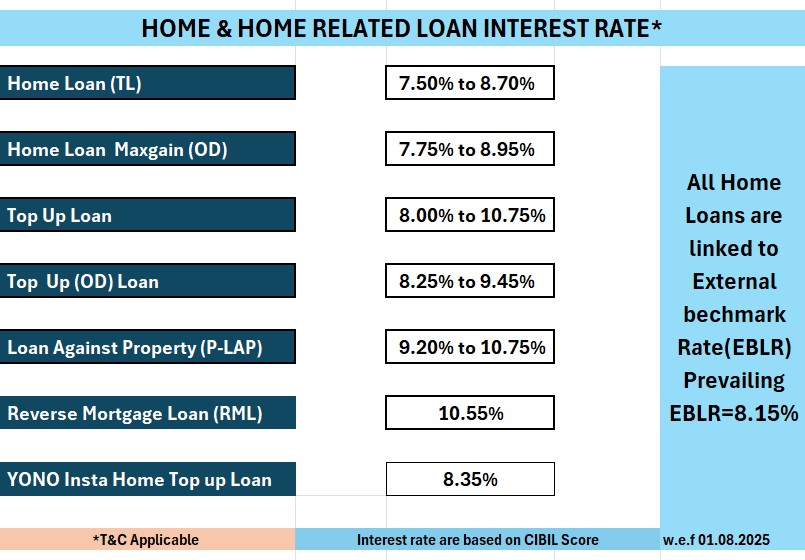
As of June 2026, home loan refinance rates in India start from approximately 7.10% p.a. For floating rates, offered by leading banks and NBFCs. The Reserve Bank of India (RBI) repo rate, currently at 5.25% (June 2026), significantly influences these rates, with lenders adding a spread based on borrower creditworthiness.

Refinancing allows borrowers to secure a lower interest rate, potentially reducing their monthly EMI or shortening the loan tenure. A strong CIBIL score above 750 and a stable income are key factors for accessing the most competitive rates.

Lender Floating Rate (p.a.) Fixed Rate (p.a.) Last Updated
Paisabazaar (Aggregator) 7.10% p.a. (starting) Not offered June 2026
Bajaj Finserv 7.25% p.a. (starting for eligible salaried borrowers) Not offered June 2026
State Bank of India (SBI) 7.25% p.a. (starting) Not offered 2026
Indian Overseas Bank 7.35% p.a. (starting) Not offered 2026
Bank of Maharashtra 7.35% p.a. (starting) Not offered 2026
Central Bank of India 7.35% p.a. (starting) Not offered 2026
ICICI Bank 7.50% p.a. (starting) Not offered 31st May 2026
Kotak Home Loan 7.60% p.a. (starting) Not offered 2026
HSBC India 7.70% p.a. (starting) Not offered May 8, 2026
DBS Bank 8.70% p.a. (starting) Not offered 2026
Union Bank of India (General Applicants) 10.20% to 11.05% p.a. Not offered 2026
Union Bank of India (Government Employees) 8.80% to 11.05% p.a. Not offered 2026
Federal Bank 7.30% p.a. (starting) Not offered 2026

The average 30-year fixed refinance rate in India was around 6.60% in March 2026, though floating rates are more common for home loans. Borrowers should compare offers from multiple lenders to find the most favorable terms for their specific profile.

Factors Affecting Refinance Rates

Several key factors influence mortgage refinance rates in India, directly impacting your potential savings. Your credit score, for instance, plays a significant role, with a score of 700 or higher generally securing more favorable rates (Source: Tata Capital).

The Reserve Bank of India’s (RBI) repo rate, currently at 5.25% as of June 2026, also has a direct bearing on floating home loan interest rates, which range from 7.60% to 9.80% p.a. In June 2026.

Factor Impact on Rate Details
Credit Score Lower Rate A CIBIL score above 750 indicates lower risk, leading to more favorable interest rates. A history of missed payments suggests higher risk, resulting in higher rates or loan rejection.
Employment Type Varies Salaried applicants often receive lower rates due to stable income. Self-employed individuals may face higher rates because of perceived income instability.
Loan Amount Varies The total principal amount being refinanced can influence the interest rate offered by lenders.
Loan Tenure Varies Longer loan durations typically attract higher rates due to increased risk for lenders. Shorter tenures often have lower rates but higher EMIs.
Income Stability & Debt-to-Income Ratio Lower Rate A higher, stable income and a lower debt-to-income ratio demonstrate a stronger repayment capacity, potentially leading to a lower interest rate.
RBI’s Repo Rate Direct Impact Changes in the RBI’s repo rate directly influence floating home loan interest rates. A decrease in the repo rate can lead to lower EMIs. As of June 2026, the repo rate is 5.25%.
Economic Conditions Varies Broader economic factors like inflation, market trends, and central bank policies affect floating interest rates. Rates might increase during economic growth and decrease during downturns.
Property Details Varies The type of property (residential vs. Commercial) can influence mortgage refinance rates. Green Home Incentives for eco-friendly properties might offer relaxed eligibility or lower fees.
Lender’s Internal Policies Varies Each bank and NBFC has its own internal risk assessment models and lending policies, which can lead to different rates for similar borrower profiles.
Loan-to-Value (LTV) Ratio Varies A lower LTV ratio (higher equity in the property) often results in better interest rates, as IT reduces the lender’s risk. RBI guidelines CAP LTV at 90% for loans up to ₹30 lakh.
Existing Relationship with Lender Potential Benefit Borrowers with a long-standing, positive relationship with their current lender may receive preferential rates or terms during refinancing.
Balance Transfer Processing Fees Indirect Impact While not a rate factor, processing fees (0.5% to 2% + GST of the loan amount, as of May 2026) for balance transfers affect the overall cost, making a rate reduction of 0.75%-1% for savings.

Understanding these factors helps you assess your eligibility and negotiate for the most competitive refinance rates available in the Indian market.

How Mortgage Refinancing Works

Mortgage refinancing replaces your existing home loan with a new one, typically to secure a lower interest rate or better terms. This process involves documentation, credit checks, property valuation, and legal verification by the new lender.

Refinancing can reduce your monthly EMIs or allow you to access equity from your property, but IT incurs closing costs that range from 2% to 6% of the new loan amount.

  • Application and Documentation: The process begins with submitting an application to a new lender, along with identity proof, income statements, and property documents. Union Bank of India also offers mortgage loans to Non-Resident Indians (NRIs).
  • Credit Assessment: Lenders evaluate your CIBIL score and debt-to-income ratio. A score of 700 or higher is preferred by most lenders for favorable refinance rates, per Tata Capital data.
  • Property Valuation: The new bank conducts a valuation of your property to determine its current market value. This helps establish the eligible loan-to-value (LTV) ratio for the refinance.
  • Loan Offer: Based on your profile and property valuation, the lender provides a new loan offer detailing the interest rate, tenure, and other terms. As of June 2026, floating home loan rates range from 7.60% to 9.80% p.a.
  • Foreclosure of Old Loan: Once you accept the new offer, the new lender pays off your existing home loan. This is considered a foreclosure of your old loan.
  • New Loan Disbursement: The new loan is then disbursed under the agreed-upon terms. The refinancing process typically takes a few weeks to a couple of months to complete, according to Ujjivan Small Finance Bank.
  • Fees and Charges: Refinancing involves various costs, including processing fees, documentation fees, and foreclosure charges from the old lender. Most banks and NBFCs charge a processing fee of 2% + GST for a mortgage application.
  • Break-Even Analysis: IT is to calculate the break-even point to ensure the savings from a lower interest rate outweigh the refinancing costs. A minimum interest rate reduction of 0.75% to 1% is generally recommended for a balance transfer to be beneficial, as per Paisabazaar.

Home loan interest rates in India are linked to the RBI repo rate, which stood at 5.25% as of June 2026, influencing refinance rates across banks.

Benefits of Refinancing Your Home Loan

Refinancing your home loan in India can significantly reduce your financial burden, especially with current interest rates starting around 7.10% p.a. As of June 2026. This process allows you to secure better terms, potentially saving a substantial amount over the loan’s tenure.

A key benefit is the opportunity to lower your monthly EMIs, which can free up funds for other investments or expenses. Consider these specific advantages when evaluating a refinance:

  • Lower Interest Rates: You can switch to a new lender offering a lower interest rate, potentially reducing your overall interest outflow by 0.75%-1% compared to your current rate.
  • Reduced EMI: A lower interest rate directly translates to reduced Equated Monthly Installments, improving your monthly cash flow. For example, a ₹60 lakh loan at 8.5% for 20 years has an EMI of approximately ₹52,000.
  • Access to Top-Up Loans: Many lenders offer a top-up loan facility during refinancing, allowing you to borrow additional funds against your property at home loan rates.
  • Improved Loan Terms: Refinancing lets you adjust your loan tenure, either extending IT to lower EMIs or shortening IT to pay off the loan faster.
  • Debt Consolidation: You can consolidate other high-interest debts, like personal loans or credit card dues, into your home loan, benefiting from a lower overall interest rate.
  • Switching to a Better Benchmark: If your current loan is linked to an older benchmark, refinancing allows you to switch to a more transparent and often lower Repo Linked Lending Rate (RLLR), which was 5.25% as of January 1, 2026 (HSBC).
  • d Credit Score: Successfully managing a refinanced loan with lower EMIs can positively impact your CIBIL score over time, provided payments are made on schedule.

These benefits make refinancing a strategic financial move for homeowners looking to optimize their loan structure and achieve long-term savings.

Refinancing Vs. Balance Transfer

Home loan refinancing and balance transfers both aim to reduce interest costs, but they differ in scope and complexity. A balance transfer primarily shifts your existing loan to a new lender for a better rate, while refinancing can involve changing loan terms, tenure, or even accessing home equity.

As of June 2026, a home loan balance transfer typically requires an interest rate reduction of at least 0.75%-1% to be financially beneficial, considering processing fees and administrative charges.

Feature Refinancing Balance Transfer
Definition Replacing an existing loan with a new one, often with different terms (e.g., lower interest rate, adjusted repayment period). Moving an outstanding loan from one lender to another, primarily to secure better interest rates or terms.
Primary Goal To secure a more favourable interest rate, adjust loan tenure, or access home equity (cash-out refinance). To reduce interest costs by moving to a lender offering a lower interest rate.
Scope Can involve changing loan type (e.g., ARM to fixed), term length (e.g., 15-year to 30-year), or taking cash out. Primarily focuses on transferring the existing loan principal to a new lender for better rates/terms.
Associated Costs Processing fees, administrative charges, property appraisal, and other closing costs (estimated 2% to 6% of loan amount). Processing fees, administrative charges, and potential prepayment penalties from the existing lender.
Impact on Credit Score Can temporarily impact due to new loan application; properly managed, IT can improve your CIBIL score. May temporarily lower due to multiple credit inquiries; properly managed, IT can improve your CIBIL score.
When to Consider When market conditions or your creditworthiness have improved, or to align the loan with current needs. When the interest rate difference is at least 0.75%-1% and significant loan tenure (10+ years) remains.
Process Complexity Generally more complex, involving a full re-evaluation of the property and borrower. Typically simpler, focusing on credit checks and documentation for the new lender.
Eligibility Criteria Similar to a new home loan, including CIBIL score (700+ preferred), income stability, and property valuation. Similar to a new home loan, with emphasis on a good repayment history with the current lender.

While both options can lead to savings, a balance transfer is often a more direct approach for interest rate reduction, whereas refinancing offers broader flexibility in loan restructuring.

Refinance Eligibility & Documents

To refinance a mortgage loan in India, applicants must meet specific eligibility criteria set by lenders, including a strong credit score and stable income. The application process involves documentation, credit checks, and property valuation, ensuring the new loan aligns with the borrower’s financial profile.

  • Credit Score: A CIBIL score of 750 or higher is generally preferred by banks for favourable refinance rates, indicating strong repayment behaviour.
  • Employment Type: Salaried individuals often receive lower interest rates due to stable income, while self-employed applicants may face slightly higher rates.
  • Income Stability: Lenders assess income to ensure the borrower can manage the new EMI, with a lower debt-to-income ratio improving eligibility.
  • Loan-to-Value (LTV) Ratio: Most banks offer refinancing up to 75-80% of the property’s current market value.
  • Property Valuation: The property undergoes a fresh valuation to determine its current market worth, impacting the eligible refinance amount.
  • Required Documents: Key documents include identity proof, address proof, income statements (salary slips/ITR), bank statements, and existing loan documents.

Non-Resident Indians (NRIs) are also eligible for mortgage loan refinancing from banks like Union Bank of India, subject to specific NRI home loan policies.

Is Refinancing Worth IT? (2026)

Refinancing a home loan in India can be highly beneficial in 2026, especially if market rates have dropped by 0.75% to 1% since your original loan. For example, if Mr. A’s property appreciated to ₹1 crore, he could secure a new loan of ₹80 lakh, providing ₹50 lakh in incremental funding after his existing ₹30 lakh balance.

The decision to refinance hinges on comparing potential interest savings against the associated costs. As of March 2026, the average 30-year fixed refinance rate was 6.60% (Source: Zillow), while some Indian banks offer starting rates around 7.10% p.a. (Source: Paisabazaar). A lower interest rate can significantly reduce your monthly EMI over the loan tenure.

However, refinancing involves various charges, including processing fees, foreclosure charges from the old lender, and documentation fees. Most banks and NBFCs charge a processing fee of 2% + GST for a mortgage application. For instance, ICICI Bank’s processing fee is 0.5% of the loan amount + applicable taxes, valid until May 31, 2026. These costs must be factored into your savings calculation to determine the true benefit.

The refinancing process typically takes a few weeks to a couple of months, involving documentation, credit checks, and property valuation. Lenders generally prefer a CIBIL score of 700 or higher for refinance eligibility. The RBI’s repo rate, currently 5.25% as of June 2026, directly influences home loan interest rates, making IT to monitor policy changes.

Key Takeaways

  • Refinancing is worthwhile if new interest rates are 0.75%-1% lower than your current rate, leading to significant EMI savings.
  • Processing fees, typically 0.5% to 2% + GST, and other administrative charges must be weighed against potential interest savings.
  • A strong CIBIL score (700+) and favorable market conditions, like the RBI’s 5.25% repo rate (June 2026), refinance benefits.

Evaluate your current loan terms and compare them with prevailing rates from various lenders to make an informed decision.

Frequently Asked Questions (FAQs)

What are current mortgage refinance rates in India for 2026?

As of March 2026, the average 30-year fixed refinance rate in India is around 6.60% p.a., according to Zillow data. Rates can vary, with some banks like ICICI Bank offering home loan rates starting from 7.50% p.a. You should compare current rates directly with lenders like SBI, HDFC, and Axis Bank.

How can I get a lower interest rate on my home loan refinance?

You can secure a lower refinance interest rate by maintaining a strong CIBIL score, typically above 750. Lenders also offer better rates to salaried individuals with stable incomes and a low debt-to-income ratio. Negotiating processing fees can further reduce your overall cost of credit.

What factors determine my mortgage refinance interest rate?

Your mortgage refinance interest rate depends on your CIBIL score, loan amount, and chosen tenure. Your employment type (salaried vs. Self-employed) and income stability also play a significant role, as self-employed applicants often face slightly higher rates. Each lender assesses risk differently, impacting the final rate offered.

What are the fees associated with mortgage refinancing in India?

Mortgage refinancing in India typically involves processing fees, which can range from 0.5% to 2% of the loan amount, plus GST. Other charges may include legal fees, technical valuation fees, and stamp duty, as a balance transfer is considered a new loan. Always verify all charges with your new lender before proceeding.

When is the best time to refinance my home loan in India?

The best time to refinance is when market interest rates have dropped significantly since you took your original loan, or when your creditworthiness has improved. Refinancing makes sense if the savings from a lower interest rate outweigh the associated processing and administrative fees. For example, if rates fall by 1% or more, IT’s often beneficial.

Can I get a cash-out refinance in India?

Yes, cash-out refinancing is available in India, allowing you to borrow against your home equity. Lenders typically require you to have at least 20% equity in your home to qualify for this option. The funds can be used for purposes like home improvements or debt consolidation.

Which banks offer the lowest mortgage refinance rates in India?

Several banks and NBFCs offer competitive mortgage refinance rates in India, including SBI, HDFC Bank, ICICI Bank, Axis Bank, and Bajaj Finserv. As of June 2026, some lenders like Paisabazaar are advertising rates starting from 7.10% p.a. You should compare offers from multiple lenders to find the best rate for your profile.


Disclaimer: This article is general information, not financial advice. Interest rates, fees, and eligibility change frequently. Verify current details with the lender or regulator (RBI / SEBI) before deciding.